

 Home
Home About Us
 Ag Library
 Ag Tech
 Ag Funding
 Ag Events
 Ag Directory
 Ag News
 Ag Innovation
 Contact Us
Ag Marketing Enters New Phase as AI Moves Beyond the Pilot Trap
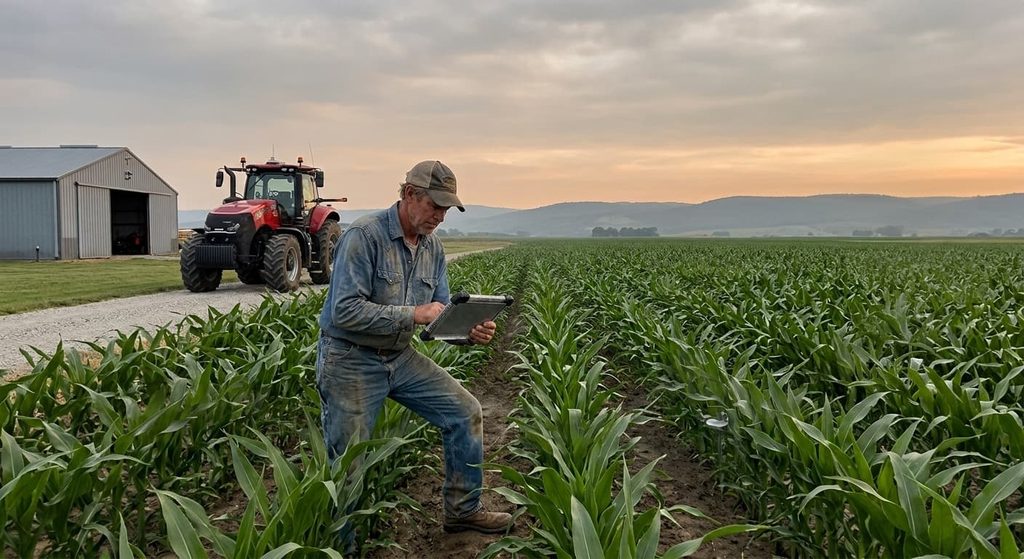
We’ve been tracking a fascinating shift in agricultural technology. Generative AI has become one of the fastest-adopted tools on farms globally, according to new McKinsey & Company research. But here’s the catch: most farmers are still testing it for free, and the gap between curiosity and commitment tells a bigger story about how our industry buys technology.
Three Surprising Findings
1. Farmers Are Using AI, But Almost Nobody’s Paying For It
McKinsey’s Global Farmer Insights 2026 shows 17% of farmers globally now use generative AI for farm-related tasks. Yet only 4% pay for AI tools, while roughly 12% use free versions. That means about 70% of AI users are experimenting without spending a cent. This isn’t a failure, it’s a classic agricultural funnel problem. Farmers want proof before committing capital.
2. Trust Still Lives With Humans, Not Algorithms
Only 6% of farmers cite Gen AI chatbots as a trusted decision-making source, compared to 56% who rely on technical agronomists. AI is being used for research, planning, and information gathering, not final decisions. Farmers are validating AI outputs with human experts before acting. That’s not resistance. That’s discipline.
3. The “Pilot Trap” Is Real, And It’s Documented
The World Economic Forum explicitly warns that many agricultural AI initiatives “shine in a pilot and then stall” when they meet commercial production realities. Tight unit economics, variable biology, and teams that cannot afford complexity are the barriers. As WEF puts it: “The barrier is rarely the algorithm. It is the workflow.” AI must “pay for itself, fast” and deliver “measurable value within a season, not a multi-year data strategy.”
Key Findings
- 17% of global farmers use generative AI for farm-related tasks. (McKinsey Global Farmer Insights 2026, September 2026)
- 4% of farmers pay for AI tools; 12% use free versions. (McKinsey Global Farmer Insights 2026, September 2026)
- 26% adoption in Latin America, the highest regional rate reported. (McKinsey Global Farmer Insights 2026, September 2026)
- 23% adoption among North American farmers. (McKinsey Global Farmer Insights 2026, September 2026)
- ~75% of farmers expect AI to impact operations within 3–5 years. (McKinsey Global Farmer Insights 2026, September 2026)
- $4.86 billion, the AI in agriculture market size in 2026. (Research and Markets, January 2026)
- $13.57 billion, projected market size by 2030. (Research and Markets, January 2026)
- 29.3%, projected CAGR for 2026–2030. (Research and Markets, January 2026)
- 43% of farmers use Gen AI for planning; 33% for crop management. (McKinsey Global Farmer Insights 2026, September 2026)
- 54% of farmers plan additional precision technology investment within two years. (CNH Farmer Pulse Report, August 2026)
What This Means for Australian Agribusinesses
The data tells us something clear: farmers are curious about AI, but they’re not yet convinced enough to pay. That’s not a problem to overcome, it’s a positioning opportunity.
Australian agribusinesses selling AI-powered tools need to stop leading with technology and start leading with outcomes. The WEF’s “seasonal ROI” framing is spot-on . Farmers don’t want a multi-year data strategy. They want a tool that solves a specific problem this season, fits their existing workflow, and doesn’t add labour.
We’re also seeing precision technology as the gateway. With 54% of farmers planning precision tech investments, AI can be positioned as an extension of tools farmers already trust, not a separate, intimidating category.
The trust hierarchy matters too. With only 6% of farmers citing AI as a trusted advice source, agribusinesses need to embed agronomic validation into their marketing. Expert commentary, farm case studies, and agricultural thought leadership will do more to build confidence than any model accuracy claim.
Expert Quote
“The data tells us farmers are experimenting with AI at remarkable speed, but they’re not opening their wallets yet. That’s not resistance, it’s rational. Australian farmers have been burned by technology promises before. Our job as an industry isn’t to convince them AI is exciting. It’s to prove it pays for itself within a season. The winners in this market will be the ones who make AI feel less like a gamble and more like a tool they can’t farm without.”
– Airlie Trescowthick, Founder, Farm Table
Methodology
This analysis draws on McKinsey & Company’s Global Farmer Insights 2026 (5,500 farmers across 10 countries, surveyed April–July 2026), the CNH Farmer Pulse Report (217 farmers across U.S. and Canada, May 2026), and market forecasts from Research and Markets. The World Economic Forum provided strategic analysis on AI scaling challenges in agriculture. Full methodology and source links are available in the complete analysis on our blog.
Read the Complete Analysis
We’ve published the full breakdown, including regional adoption comparisons, the free-to-paid conversion challenge, and practical ag marketing strategies for positioning AI tools to Australian producers.
Read the complete analysis with full methodology on our blog → Ag Marketing Shifts as AI Moves From Pilot to Daily Farm Operations
Need help positioning your ag-tech product for the Australian market? Explore Farm Table’s Agricultural Marketing Services